As part of my coursework requirements for Information Literacy Instruction, I designed a lesson plan for a workshop about topic-based writing and the basics of DITA XML. The workshop is designed for a professional context, ostensibly for use in orienting interns or new employees who will be doing some technical writing work without a lot of experience in this area.
Content
I based my knowledge of the workshop material on my own professional experience as a knowledge management intern with ADP Canada. Starting the internship, I was unfamiliar with topic-based writing or DITA XML. I did my learning on the job through a combination of watching video tutorials, working alongside other members of my KM team, attending virtual office hours with U.S.-based enterprise learning and KM associates, and practice. I’m not an expert or professionally trained technical writer, but this is a topic that I’ve become quite familiar with since starting with ADP Canada in May 2019.
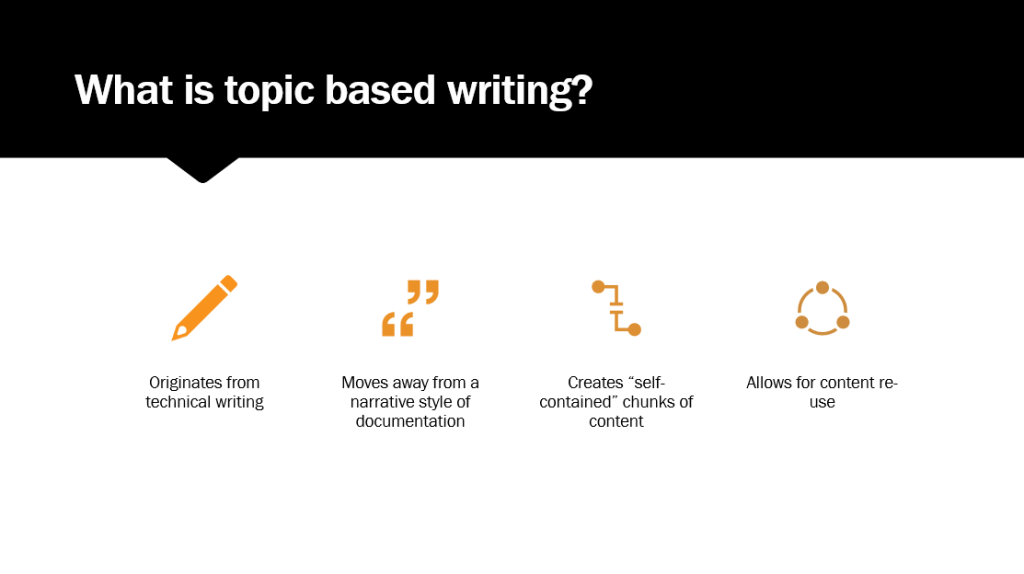
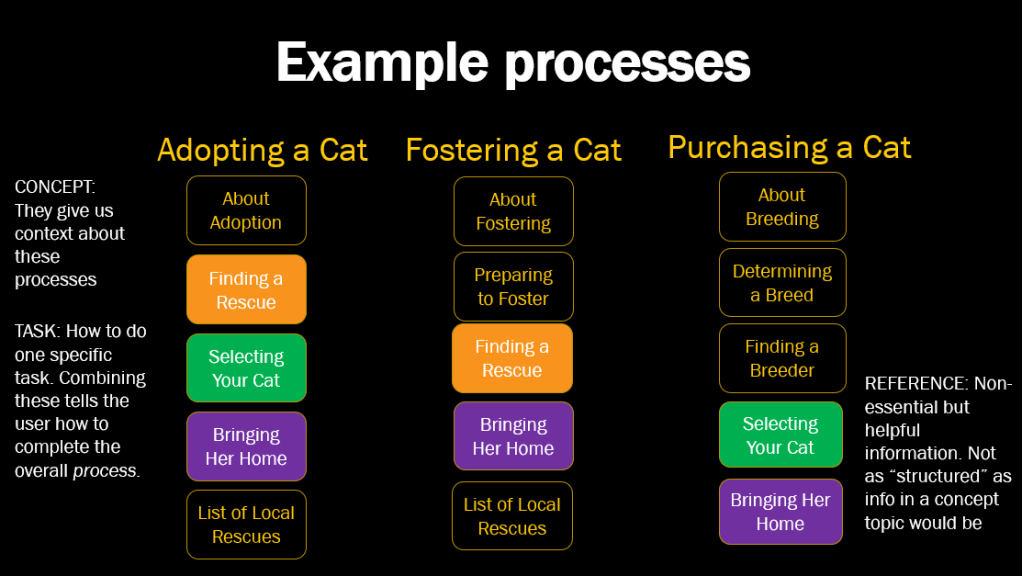
It should be noted that while the lesson plan and activities were developed with a workplace audience in mind (undergraduate-level interns), the lesson was delivered to a class of library school students. Some of the examples used reflect this, e.g., showing the audience how topic reuse works by comparing three different articles about cats. In a real-world setting, these examples would be tailored to a different target audience.
Materials
Here are the materials that I designed for the workshop. Feel feel to use or adapt if you would like. I’m also happy to hear your thoughts and suggestions on how these materials can be improved, or what you think works well. How would you change them to suit your organization?
NOTE: These materials are licenced under a CC BY-SA 4.0 Creative Commons licence, meaning you’re free to use them and adapt them as long as they’re appropriately attributed. If you make changes to these materials and want to redistribute them, you’ll need to use the same licence.
Suggested Evaluation Tool [Live Link]
Important note about the slide deck – my in class presentation was for approximately 35 minutes of the 55 minute lesson plan. Several departures from the lesson plan are evident; these were made due to the switch to an online-only presentation environment after the COVID-19 campus closure. The original lesson plan is designed for an in-person workshop.
What I learned
Lesson planning takes a long time!
I really enjoyed this project, and it solidifed for me how passionate I am about teaching and designing content. I’ve often held informal teaching roles in my prior workplaces, including the creation of a job aid manual and several database tutorials during my time working in client experience & verification at PeopleFacts, writing call scripts and providing orientation to new clients at Huron Law Group, and re-vamping knowledge content at ADP Canada. I’ve also done new client implementation at PeopleFacts, which involved orienting clients to our company, their service set-up, our software, and other need-to-know info.
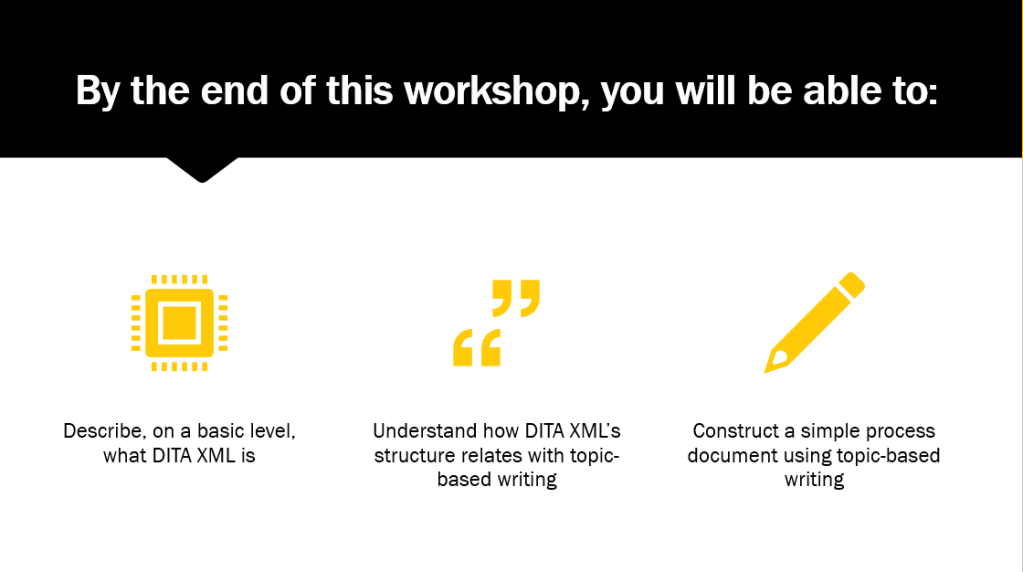
However, making this lesson plan was my first time formally creating instructional materials following backwards design principles. I had to really consider what I wanted learners to walk away knowing and being able to do. For this, I used Bloom’s taxonomy to structure the planned outcomes, and I carefully structured the instructional content and workshop activities around them. (For the interested, I found this PDF handout with a big list of action verbs to be really helpful in clarifying my outcomes.)
Thinking about assessment measures and evaluation methods was also helpful. Many workplaces already employ evaluation methods like follow-up surveys to see how effective clients and staff find training sessions. What I’ve found to be less common are built in assessment checks throughout lesson delivery. I’ve experienced this in some workplace training tutorials in the form of comprehensive checks and quizzes. For live demos, I have not seen this so explicitly laid out. So, I tried to brainstorm some effective ways to incorporate these live checks during my lesson.
At several points, I ask learners to get engaged by answering questions and helping me design a topic-based article. The final exercise has learners make their own topic-based article in small groups, during which the instructor circulates to check progress, answer questions, and provide feedback. Then, the class comes together to talk about their approaches, what worked for them, and where they struggled. In an online context, these exercises would need to be adapted, but for an in-person workshop, they are effective.
What are your thoughts?
I’d love to hear from experienced educators, instructional designers, and enterprise learning folks about your lessons learned and suggestions for workplace content design and delivery. Send me a message and let me know your thoughts!


 Katherine Luber
Leave a comment